
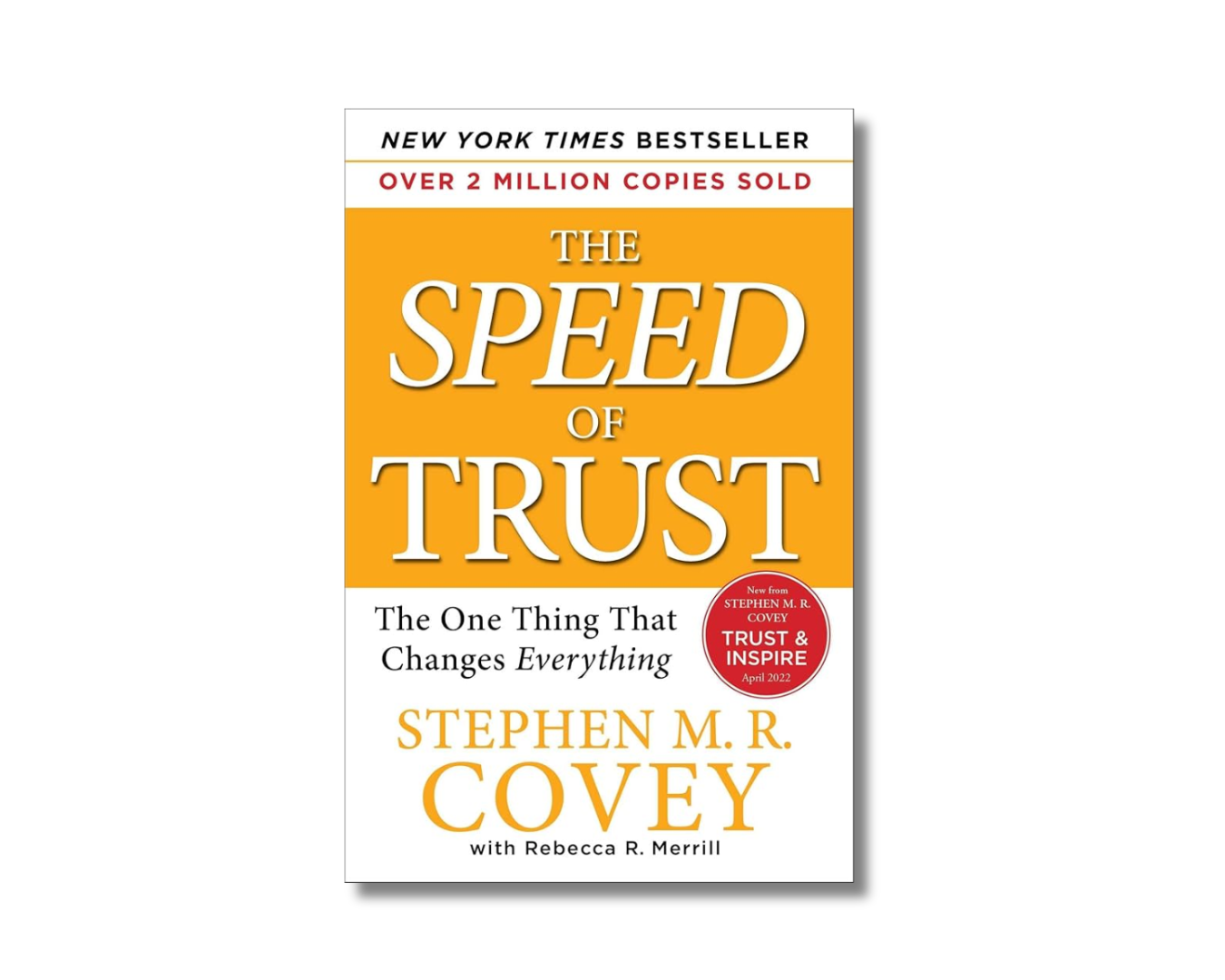
Most founders treat trust like a value. Important, yes. But not strategic.
Stephen M.R. Covey flips that thinking in The Speed of Trust. He calls trust an economic driver.
Here’s why that matters for you as a founder:
- When trust is high, approvals don’t stack. Execution flows. Decisions get made faster.
- When trust is low, emails multiply. Follow-ups increase. Delegation becomes babysitting.
For a scaling company, those friction points decide whether you’re moving at startup speed, or corporate crawl.
Trust isn’t just moral. It’s operational. And when trust goes up, speed goes up. Costs come down.
That’s why founders who treat trust as strategy, not sentiment, build companies that move faster than their competitors.
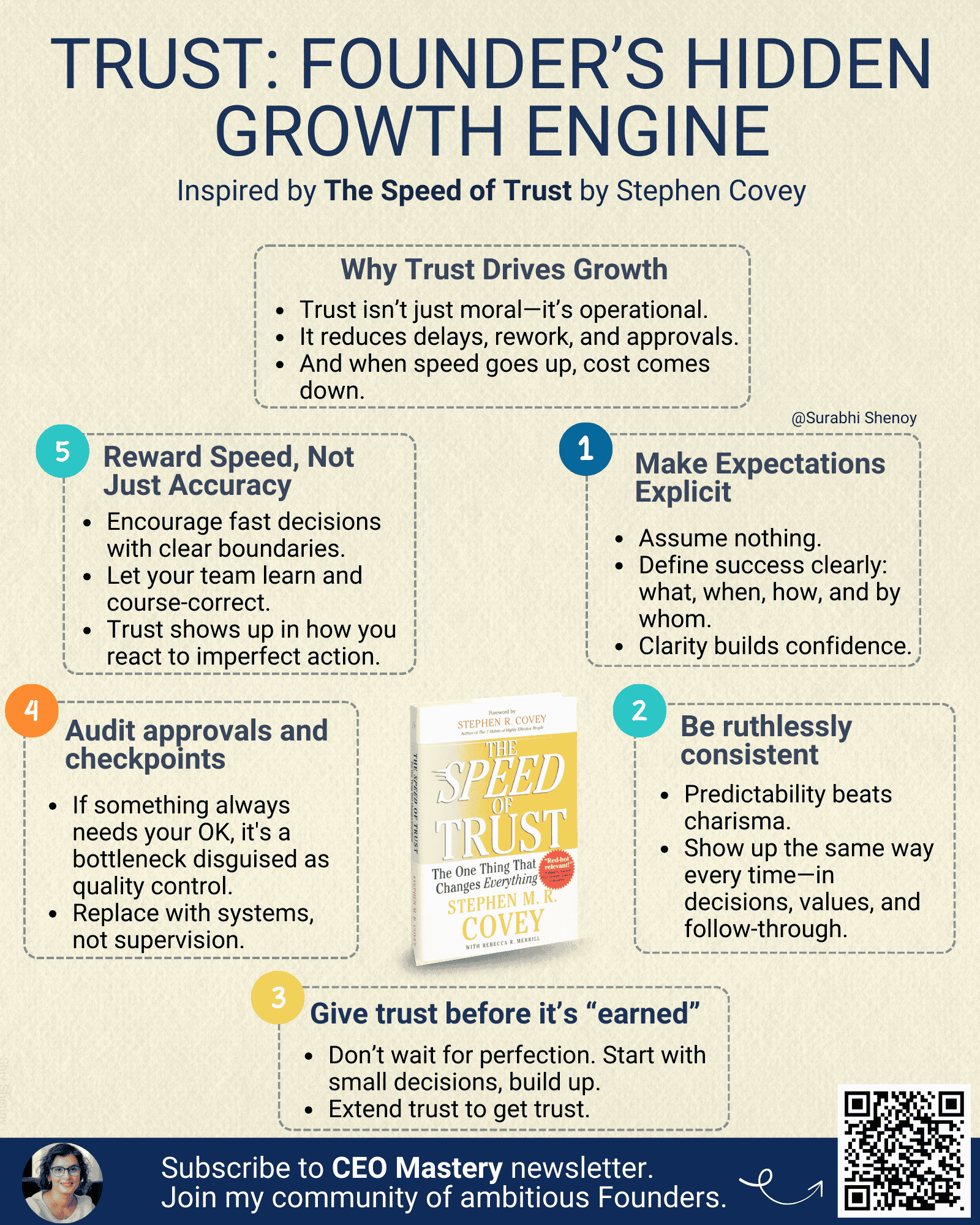
Make Expectations Explicit
One of the fastest ways trust breaks is through assumptions.
You thought a deliverable meant one thing. Your team interpreted it differently. Weeks later, you’re frustrated, they’re confused, and progress is stalled.
Covey’s principle: don’t assume. Define.
- What does success look like?
- Who is responsible?
- By when?
- In what format?
Takeaway for founders: Clarity builds confidence. Every time you make expectations explicit, you install speed into your system.
Be Ruthlessly Consistent
Charisma gets attention. But consistency builds trust.
Founders often underestimate how much teams and investors read into patterns. Do you show up the same way in decisions, values, and follow-through—or does it feel like guesswork?
Covey argues predictability beats persuasion. When people can count on you to act in line with your principles, they stop hesitating and start executing.
Takeaway for founders: Consistency isn’t boring, it’s leverage. It reduces second-guessing, micromanagement, and doubt.
Give Trust Before It’s “Earned”
Founders often hold trust back, waiting for people to prove themselves. But that delay creates paralysis.
Covey’s point: start small, extend trust early.
When you hand someone a decision, a budget, or ownership of a meeting, you send a signal: I believe you can.
Done right, people grow into that trust. They act with greater care because they don’t want to lose it.
Takeaway for founders: Trust is not a reward. It’s an accelerant. Extend it in measured doses to speed up learning and ownership.
Audit Approvals and Checkpoints
If everything requires your sign-off, speed collapses.
Covey frames constant approvals not as quality control but as disguised bottlenecks. A founder who insists on checking everything is really signaling: I don’t trust my systems.
The fix isn’t more oversight. It’s stronger systems. Create clear guardrails, decision rights, and escalation paths.
Takeaway for founders: Replace approvals with frameworks. When people know how far they can go without a green light, execution accelerates.
Reward Speed, Not Just Accuracy
Founders often overemphasize precision. But perfectionism slows everything down.
Covey emphasizes rewarding responsible speed. Encourage fast decisions with clear boundaries. Let people learn, course-correct, and keep moving.
Your real test as a leader isn’t whether people get it right every time. It’s how you respond when they don’t. Do you react with trust, or with punishment?
Takeaway for founders: Reward momentum. Trust grows in how you handle imperfection.
Final Thought
The biggest shift The Speed of Trust creates is this: trust isn’t a soft virtue. It’s a hard-edge performance multiplier.
For founders, that means trust is not just how you feel about your team. It’s how you design your company’s systems, rhythms, and decisions.
Because when trust is built into the way you operate, approvals shrink, execution scales, and growth compounds.
That’s how you move from founder-reliant to founder-free.