
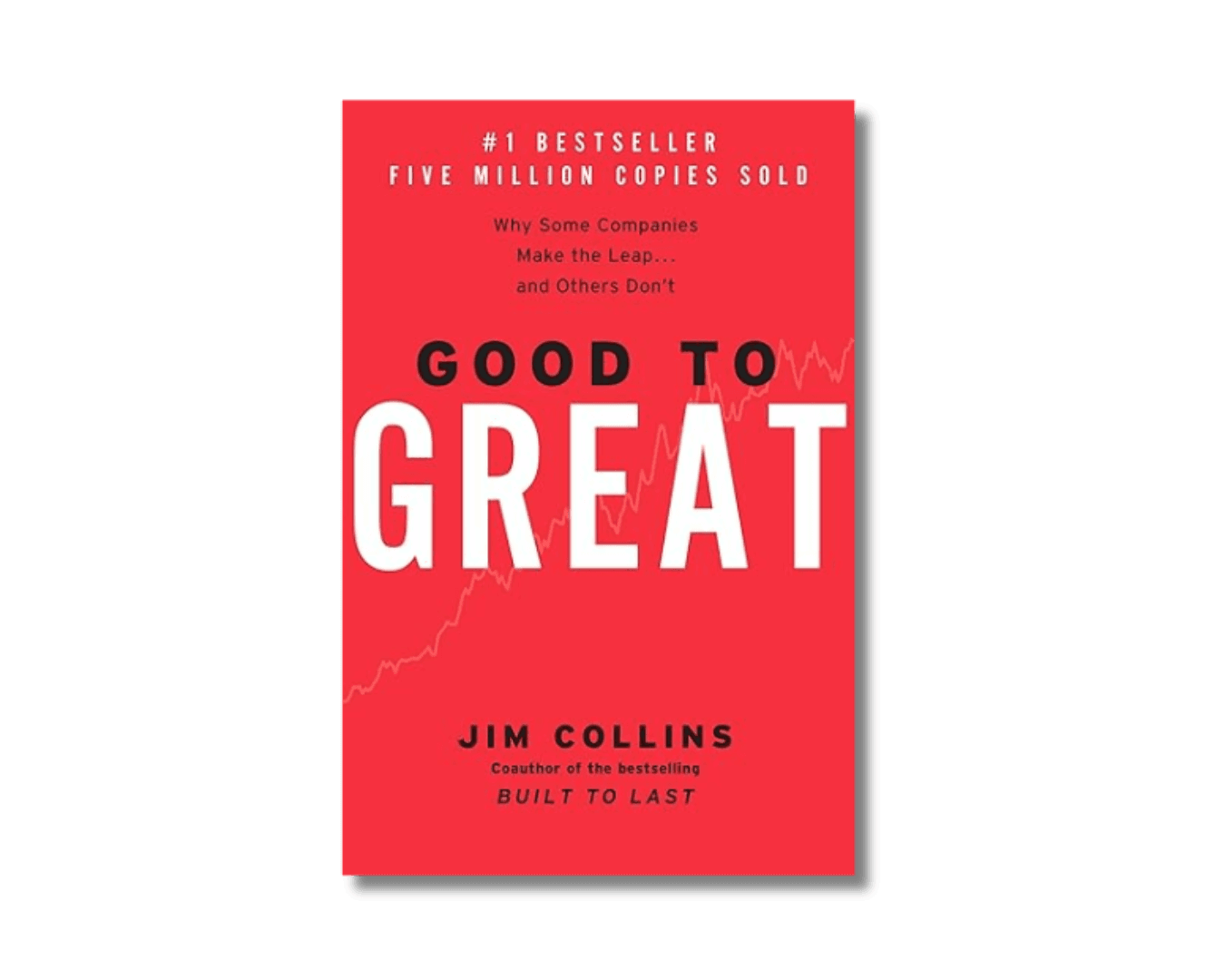
I read Good to Great in 2005.
Our team had 20 people.
No investors. No hype. Just grit.
That book quietly shaped everything — all the way to 200+ employees and a clean exit.
Here’s what’s surprising:
Jim Collins studied billion-dollar giants. But the lessons hit even harder for our tiny, bootstrapped team.
The Principles That Built Our Company
The ideas from Good to Great aren’t just theory. They became our daily playbook. Here’s what worked for us:
1. The Hedgehog Concept
We said no. A lot.
- No to cool ideas.
- No to shiny offers.
- Yes to the one thing we did best.
Your hedgehog is where three circles meet:
- What you love
- What you’re best at
- What drives profit
Finding this sweet spot meant turning down good chances to chase great ones. It wasn’t easy, but it kept us focused when competitors chased every new trend.
2. Level 5 Leadership
No chest-thumping. No founder selfies. Just quiet, relentless work.
It was never about us. It was about the company.
Level 5 leaders mix two things that rarely go together:
- Personal humility (it’s not about them)
- Professional resolve (they’ll do whatever it takes)
This approach helped us make tough calls without ego getting in the way. We could admit mistakes faster and fix problems without caring who got credit.
3. First Who, Then What
Right people in the right seats. Always.
- No B-players.
- No culture excuses.
Strategy came after the team.
We spent more time hiring than doing almost anything else. When we got the right people, many problems solved themselves. When we rushed and made bad hires, no strategy could save us.
4. The Flywheel Effect
No big breaks. No “one campaign changed everything.”
We just pushed. Again and again. Until momentum took over.
Growth felt slow at first. We’d push the flywheel:
- Improve the product a bit
- Get a few more happy customers
- Reinvest their payments
- Improve the product more
Then one day, the wheel started moving on its own. But there was never a single moment it “took off” – just the compound effect of small pushes.
5. Confront the Brutal Facts
Every tough truth on the table.
- No fluff.
- No fake wins.
We chose clarity over comfort.
In our quarterly meetings, we looked at the hard numbers. What was really working? What was failing? No sugarcoating allowed.
This habit saved us from countless expensive mistakes. We could spot problems while they were small and pivot faster than bigger companies.
Applying These Principles as a Self-Funded Founder
Here’s the twist: Good to Great works even better for founders like us.
No boards. No pressure to grow at any cost. Just the freedom to build something real.
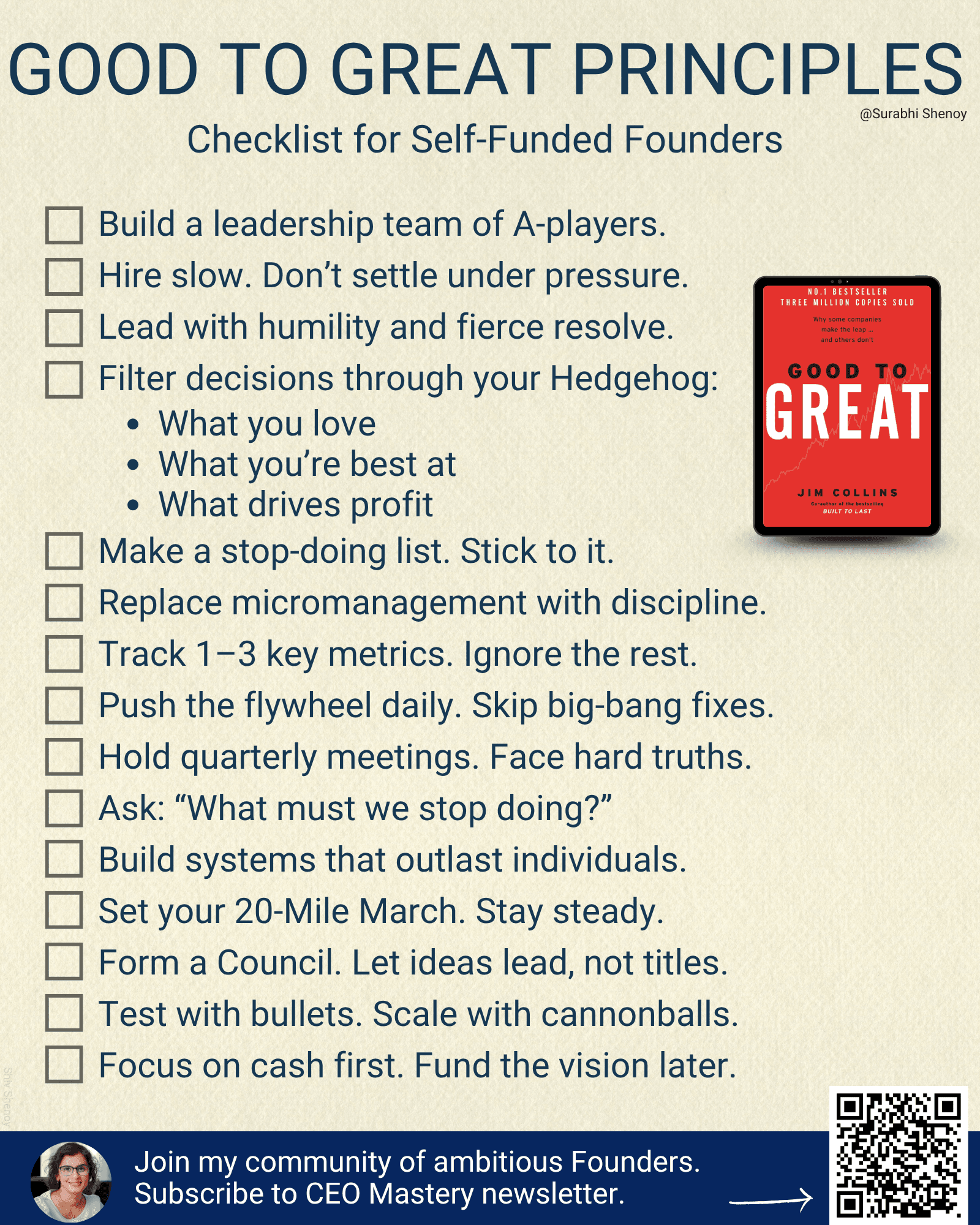
I’ve turned these lessons into a simple checklist you can use:
☐ Build a leadership team of A-players.
☐ Hire slow. Don’t settle under pressure.
☐ Lead with humility and fierce resolve.
☐ Make a stop-doing list. Stick to it.
☐ Replace micromanagement with discipline.
☐ Track 1-3 key metrics. Ignore the rest.
☐ Push the flywheel daily. Skip big-bang fixes.
☐ Hold quarterly meetings. Face hard truths.
☐ Ask: “What must we stop doing?”
☐ Build systems that outlast individuals.
☐ Set your 20-Mile March. Stay steady.
☐ Form a Council. Let ideas lead, not titles.
☐ Test with bullets. Scale with cannonballs.
☐ Focus on cash first. Fund the vision later.
The Self-Funded Advantage
The irony? Being bootstrapped gave us an edge in applying these principles:
- We could think long-term. Without investor pressure, we made decisions on a 1-3-5 year horizon, not quarterly.
- We stayed close to customers. Revenue wasn’t just a metric. It was survival. This kept us deeply connected to what customers truly valued.
- We built culture organically. Our values weren’t posters on a wall. They were daily choices about how we worked and who we hired.
- We valued profit from day one. We never confused growth with success. Every dollar earned was proof we were delivering real value.
- We could say no to growth for growth’s sake. Some opportunities would have made us bigger but not better. We had the freedom to pass.
Who Should Read This Book
“Good to Great” is essential reading for:
- Self-funded founders who want to build companies that last
- Small business owners looking to scale without outside investment
- Leaders of growing teams (10-50 people) facing their first scaling challenges
- Entrepreneurs tired of hype and looking for proven, timeless principles
- Anyone building something meant to outlast them
You don’t need to be running a billion-dollar company to apply these ideas. In fact, smaller teams often see bigger benefits because they can implement changes faster and more holistically.
The book might have studied giants, but its wisdom scales down perfectly. Sometimes, the path from small to significant follows the same principles as the journey from good to great.
And if you’d like to Explore More Strategic Frameworks From My Bookshelf, you might find these interesting:
Essentialism – Master the art of saying no that powers the Hedgehog Concept’s singular focus
The E-Myth Revisited – The perfect complement to “Build systems that outlast individuals” with practical implementation steps