
Last October, I turned 50.
Two things started shifting after that.
My body started asking for something different. I’d always exercised in some form or another, be it weight-lifting or yoga. But this time, something was missing, and I couldn’t name it.
My writing had gone quiet too. For 96 weeks, I published an article per week. Then, without warning, I hit a slump.
The pull to write — really write, as an essayist, had been growing ever more strongly, but nothing much was flowing onto the page.
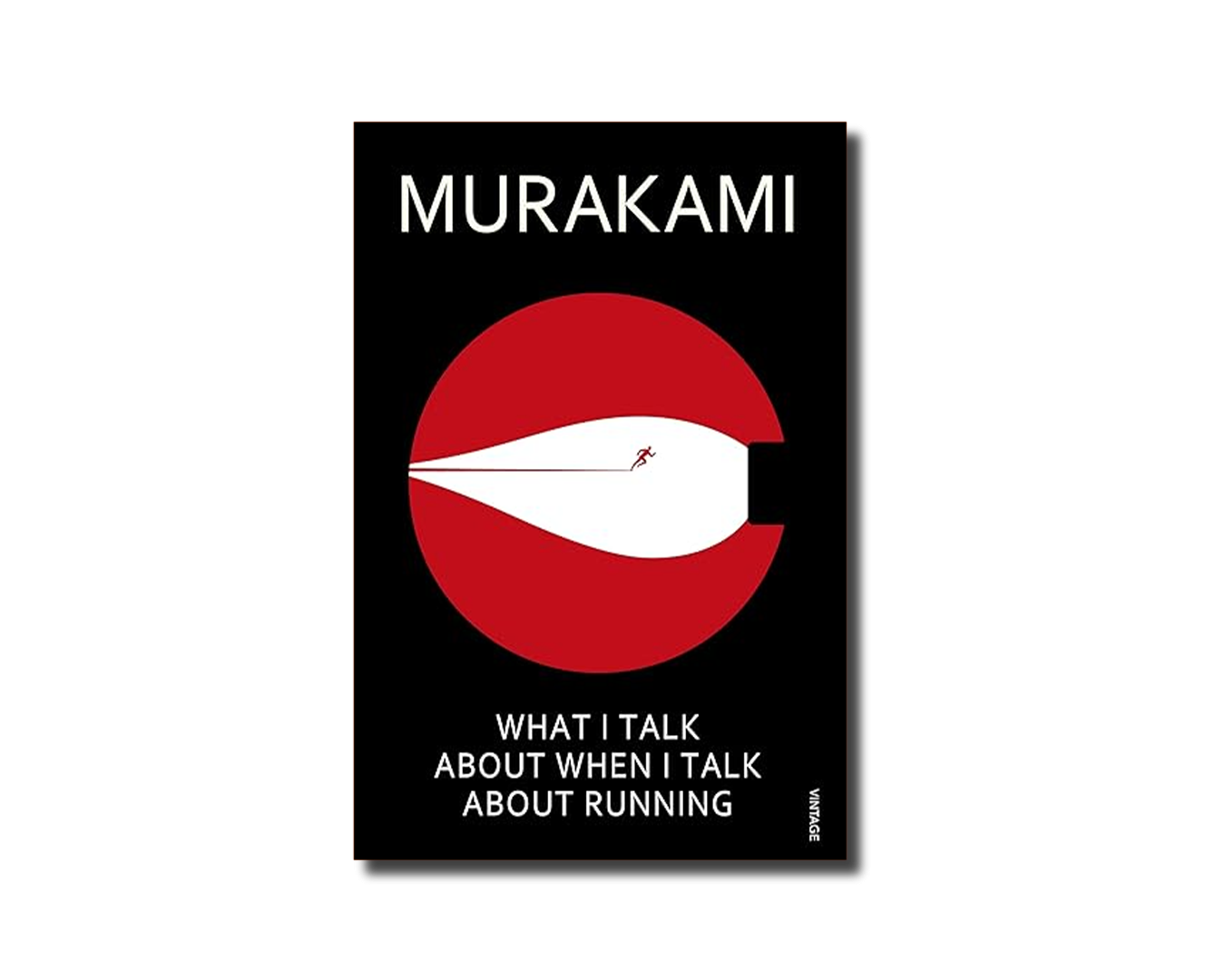
I must have been searching for an answer because What I Talk About When I Talk About Running by Haruki Murakami kept finding me. It showed up everywhere. Thanks to algorithms, for once.
I downloaded the Kindle sample.
Kindle samples don’t let you highlight.
I hadn’t even finished the foreword, and I already wanted to highlight half of it.
So I bought the book.
I couldn’t put it down.
I’m a slow reader. This book is calm, quiet, almost meditative, but it still left me charged. It helped me look hard at my own life. My boredom. My habit of jumping from one goal to the next before the last one even settles.
Quick take for the impatient ones: This isn’t really a book about running. It’s Murakami’s brilliant account of showing up for the run, for the page, for thirty more years of a life, on the days he didn’t feel like it. If you’ve ever wondered how people build something for the long haul, you will find answers in this book.
What Is the Book About?
Haruki Murakami has published more than a dozen novels. He was 33 when he started running, and in the decades since, he’s completed more than twenty marathons, one ultramarathon, and several triathlons.
Somewhere in there, he realized that running and writing novels are trained by the exact same muscle.
Not talent. Not inspiration. But repetition.
This book reads like a work log. No romantic idea of talent striking like lightning, but just the plain mechanics of showing up.
Key Takeaways from What I Talk About When I Talk About Running
This is not a business book, but read it sideways; it offers lessons about building anything meant to outlast initial excitement.
Here’s what stuck with me long after I finished the book.
1. Rhythm is the real skill, not intensity
Murakami describes the hardest part of any long project as getting the flywheel to spin at a set speed. Once the pace is set, the rest takes care of itself.
The key to setting that pace? Never emptying the tank.
Murakami’s rule is to put in 80% effort every day. Not maxed out. Not depleted. Enough left over that showing up tomorrow still sounds appealing.
I see this in my own weightlifting. Push hard today, and tomorrow’s session starts with dread. Stop at 80 percent, and tomorrow is just another normal day of training.
It’s the same in business. One heroic sixteen-hour day followed by three days of recovery isn’t rhythm — it’s the boom-and-bust cycle rhythm is supposed to replace.
Ask yourself: where this week are you spending 100 percent, when 80 would get the job done and still leave you wanting to come back tomorrow?
2. Solitude cuts both ways
The world is full of people with different opinions and values. Spend time with them, and clashes happen.
Solitude protects you from that. Step away from people, and you avoid being judged, criticized, or misunderstood.
But that friction actually shapes you. Every clash sharpens your own way of seeing things — your lens, your words — it makes you unique.
Step away, and you’re safe. But you also stop growing. That’s what makes it double-edged.
Ask yourself: what are you avoiding because you’re afraid of being judged wrongly or misunderstood?
Build in your own way. Lead in your own way. But stay exposed to people and situations — that’s where ‘your own way’ actually gets formed.
3. You need your one in ten
Before becoming a full-time writer, Murakami ran a jazz bar.
His entire business philosophy: if one out of ten customers loved the place enough to come back regularly, that was enough to survive. He didn’t chase the other nine. He just made sure that whoever loves the place truly loves it and will continue to love it.
He followed the same philosophy in his writing. He knew that not everybody would like his books, but those who did really liked them. So he wrote only for them.
That’s a positioning lesson for founders.
Many businesses die trying to be liked by everyone, instead of being unforgettable to the right few.
4. Talent, Focus, and Endurance
Murakami ranks what a good novelist needs: First, the talent — that’s non-negotiable but also out of your control. Then focus. Then endurance.
Unlike talent, the last two can be trained.
Your ability to concentrate all your limited talent can make up for any talent shortage.
Endurance is what makes the real difference over the years.
Building a business is exactly like a marathon. It’s not a sprint; it’s a test of your stamina. Plenty of founders can go hard for a quarter. Very few can show up with the same intensity in the 4th year.
You can’t win even if you are more talented than everyone else. You can win by simply outlasting them.
5. Protect your few reasons, not your motivation
Murakami says it plainly, “I have only a few reasons to keep on running, and a truckload of them to quit.”
That ratio never flips. There will always be more reasons to stop than reasons to continue.
Founders know this list well. A slow quarter. A client who ghosts. A star employee quits. Reasons to give up, not show up, will always be there.
What’s harder to find is your two or three real reasons for building this in the first place. Write them down somewhere you’ll see them. It will come in handy when you question what’s the point of all this.
Life After the Exit: What This Book Taught Me
Murakami once ran an ultra-marathon — 62 miles, 100 km.
Something in him changed after that. He says “a mental gap” opened up between him and running. He stepped away from marathons for a while. Eventually, he became a triathlete instead.
The four years before my business exit were grueling — laden with personal loss, extreme responsibility, and overwork, all at once. That was my ultra-marathon. A “mental gap” opened up for me too. I want to stay close to building businesses, but I don’t want to be in one now (atleast, not yet). That’s how coaching founders serves me well.
Reading this book gave me the language to describe what I’d been feeling. Murakami named the gap and made it okay for me to feel it too.
This book isn’t only for the years you’re grinding toward something. It’s also for the emptiness that comes after the success — after the goal you trained for is behind you.
Best Quotes from What I Talk About When I Talk About Running
“Pain is inevitable. Suffering is optional.”
“I just run. I run in a void. Or maybe I should put it the other way: I run in order to acquire a void.”
“Sometimes taking time is actually a shortcut.”
Who Should Read What I Talk About When I Talk About Running
You’ll get the most out of this book if:
- You’re a founder who is tired of “hustle” being the only growth strategy
- You’ve hit a plateau in a creative or professional pursuit and need a different way to think about consistency
- You’ve reached the “after” of a big goal — an exit, a launch, a finish line — and aren’t sure what comes next
- You’re going through a personal milestone or transition and want a calm, non-prescriptive companion rather than advice
- You enjoy memoirs that teach through reflection, not direct instruction
It’s also a good read even if none of that applies. It’s really a book about doing something hard on your own terms.