In 2011, JCPenney made a bold move. They hired Ron Johnson, the mastermind behind Apple’s retail success.
JCPenney, a 120-year-old American retail chain with over 800 stores, was struggling with declining sales and an outdated brand. Shoppers saw it as a discount retailer, dependent on coupons and sales to drive foot traffic.
Meanwhile, Ron had worked magic at Apple. His track record was impeccable. He built Apple’s retail empire from scratch, turning stores into a $20B+ powerhouse with sleek, high-end customer experiences.
Surely, he could do the same for JCPenney?
It failed—spectacularly.
Johnson scrapped discounts, believing customers would embrace premium pricing. Instead, sales plummeted 25% in a year, and JCP lost $985 million.
What went wrong?
- Apple’s customers paid for experience, innovation, and brand prestige.
- JCP’s customers expected deals and discounts—and left when they didn’t get them.
Johnson assumed the same playbook that worked at Apple would work at JCP.
But hiring isn’t about past success—it’s about fit.
This mistake isn’t unique to JCP. I see founders make the same hiring mistake all the time.
- They hire someone from a high-growth SaaS startup to lead sales at their bootstrapped B2B business.
- They bring in a corporate exec used to big budgets—only to realize they struggle in a resource-constrained startup.
- They assume hiring a superstar from another company = instant success.
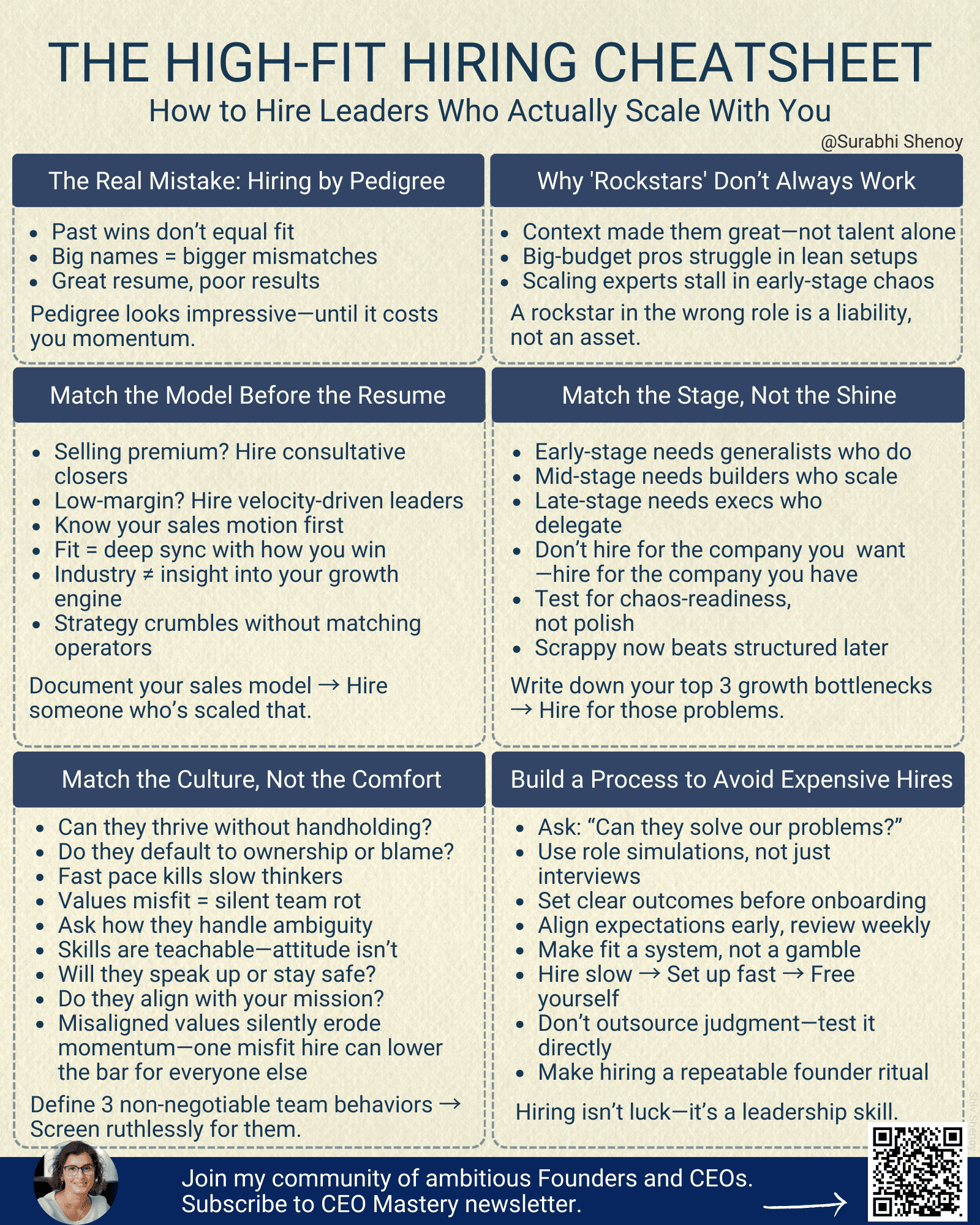
A ‘Rockstar’ in One Business Can Be a Liability in Another
Great hires fail when they don’t match your:
Business Model – Selling a premium service? You need a sales leader who thrives on consultative selling, not high-volume transactions.
Stage of Growth – At $1M, you need scrappy generalists. At $10M, you need specialists who can optimize. At $100M, you need executives who scale teams. Leaders who excel at process optimization might struggle in the chaos of early-stage growth.
Company Culture – A great hire needs to thrive in your work environment, not just bring impressive credentials.
This is where most founders go wrong.
How to Avoid This Hiring Trap
Most hiring mistakes happen because founders ask the wrong questions.
“Where have you worked before?”
→ Past success ≠ future success in your business.
“What were your biggest wins?”
→ A win in one environment may not translate to yours.
“Do you have experience in our industry?”
→ Industry experience is useful, but it’s not the same as knowing how to drive results in your company’s specific model.
The real question is: Can they solve the problems unique to your business?
The best CEOs hire for fit, not just credentials.
Takeaway: Hiring Is a CEO Skill
You can’t delegate effectively if you don’t have the right leaders in place.
Most founders struggle to build a strong core leadership team because they:
- Hire based on credentials, not for diverse knowledge and adaptability.
- Expect new hires to figure things out instead of setting them up for success.
The right leadership team isn’t just about filling roles—it’s about freeing you up to work on the business, not in it.
 If you’ve tried hiring before and it didn’t work, it’s not you—it’s how you approach your hiring. My course will show you what to look for when building your leadership team for scale—without costly hiring mistakes.
 Learn More & Enroll: Founder’s Freedom Blueprint
—Surabhi
P.S. Hiring mistakes don’t just cost money—they cost momentum. They also show you in a poor light to the team. If you’ve made a bad hire before, the solution isn’t replacing them—it’s fixing your selection process. Let’s get it right this time.